

Auto repair’s visual impact is huge when a paint job matches perfectly. Color matching is both an art and a science. It requires knowing about pigments, how to apply them, and how light affects car surfaces.
First, finding the original color is key. But, it’s hard because paint can fade, and new materials might be different. Thanks to advanced tech and expert skills, we can blend colors well. This is vital for top-notch auto repair services.
Key Takeaways
- Understanding color theory is essential for accurate paint matching in collision repair.
- Lighting conditions, surface texture, and environmental factors significantly impact the color matching process.
- Advanced tools and equipment, such as spectrophotometers and computerized systems, are crucial for achieving precise color matches.
- The collaboration between skilled technicians and cutting-edge technology is essential for delivering seamless paint repairs.
- Precise color matching is critical for maintaining the aesthetic appeal and resale value of a vehicle.
The Importance of Accurate Color Matching in Auto Repairs
Color matching is key in auto repairs. It affects how the car looks and its value. Getting the color right keeps the car’s value high. For many, their car shows off their style, and a perfect repair keeps that style intact.
Impact on Aesthetic Appeal and Resale Value
Wrong paint colors can lower a car’s resale price. Colors like black and red come in many shades, making matching hard. Weather and fading can change how the paint looks over time.
Getting the color right helps hide past damage. This is key for selling the car later or passing inspections.
Understanding Color Theory and Paint Composition
Color matching needs a deep knowledge of color theory and paint makeup. Technicians use special tools and systems to match the original paint’s look. Spectrophotometers help find the right paint color by measuring light and shades. They use the car’s VIN to get the paint right.
Getting the color right is crucial for a car’s look and value. By using color theory and new tech, repair pros can make repairs that look original. This keeps the car’s look and the owner’s style in check.
The Challenges of Paint Matching
Finding a perfect paint match in auto repair is tough. It’s like solving a puzzle with many pieces missing. The sun and weather can fade paint over time. This makes it hard to match the car’s original color.
Paint batches also have their own set of challenges. Even with the same color code, different batches can look slightly different. This is a big problem for cars needing lots of paint work or touch-ups.
Complexities of Metallic and Pearlescent Paints
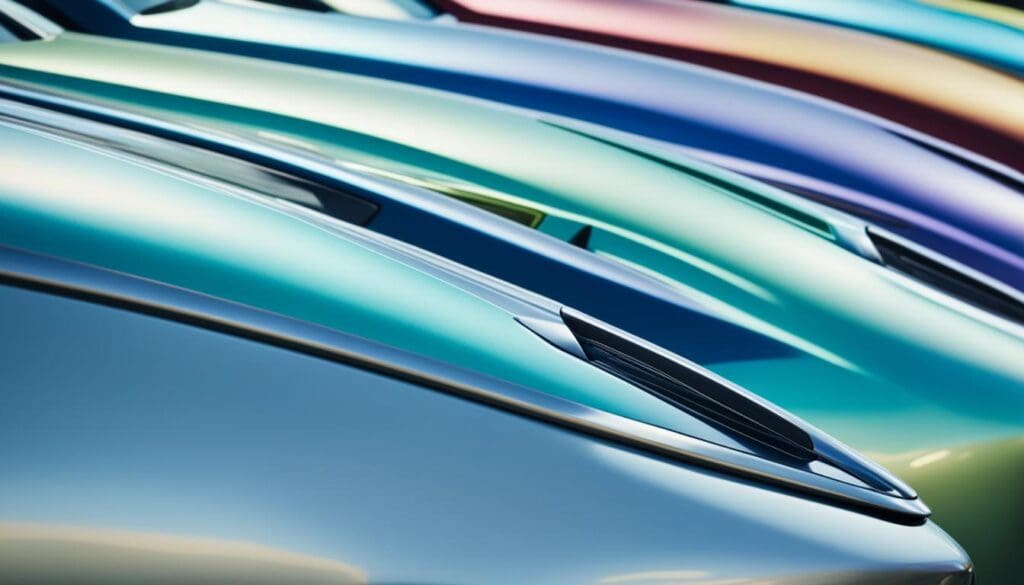
Metallic and pearlescent paints make paint matching even harder. They change color depending on the light and angle. This makes it tough to get a perfect match.
Things like pigment floatation and surface temperature add to the challenge. Flex additives in the clearcoat can also make it harder.
To overcome these challenges, auto repair pros use advanced tech and their expertise. They’re always finding new ways to make cars look like new. This helps keep the car looking great and increases its value.
Advances in Color Matching Technology
The auto repair industry has seen big changes in color matching tech. At the lead are spectrophotometers, tools that measure a car’s paint color with great accuracy. They look at hue, saturation, and brightness. Then, they use this info to find the exact paint match from a huge database.
Spectrophotometers and Computerized Systems
Computerized paint mixing systems have changed how we match colors. These systems control the amount of each pigment in the paint. This means less room for error and consistent results every time. The mix of spectrophotometers and these systems has made color matching more accurate and efficient.
Automated Paint Mixing Systems
Now, color matching tech goes beyond just measuring and mixing. Automated paint mixing systems have changed everything. They can mix the right amount of each pigment for the perfect color. This means every repair looks flawless, keeping the car’s original beauty.
Together, spectrophotometers, computerized systems, and automated mixers have changed auto repair. They let technicians work with unmatched precision and speed. Now, every fixed vehicle looks brand new.
Paint Matching: Blending Art and Science
Paint matching in the collision repair industry is both an art and a science. It requires advanced technology for data and precision. Yet, the skill and craftsmanship of technicians are key for a perfect finish. They need to know a lot about color theory and how to mix paint to match a car’s original color.
The Role of Human Expertise and Craftsmanship
Getting a paint match right is hard. A small mistake in mixing paint can make the color look off. Technicians use their artistic eye and precise skills to make cars look new again. They know how to mix colors, use spray guns, and cure paint for a perfect match.
Understanding Color Spaces and Tinting
Paint matching faces challenges like fading from the sun, paint batch changes, and complex finishes. Technicians must understand color spaces and tinting to overcome these issues. They use tools like spectrophotometers to measure color accurately. This helps them capture the original paint’s shades and effects.
The art of paint matching shows how technology and skill work together in collision repair. Technicians use their skills to restore cars to their original look. This not only makes the car look new but also keeps its value.
Achieving Precision in Paint Matching
At the core of top-notch auto body repairs is the goal of perfect paint matching. This process blends art and science, with even the smallest color difference affecting a car’s look and value.
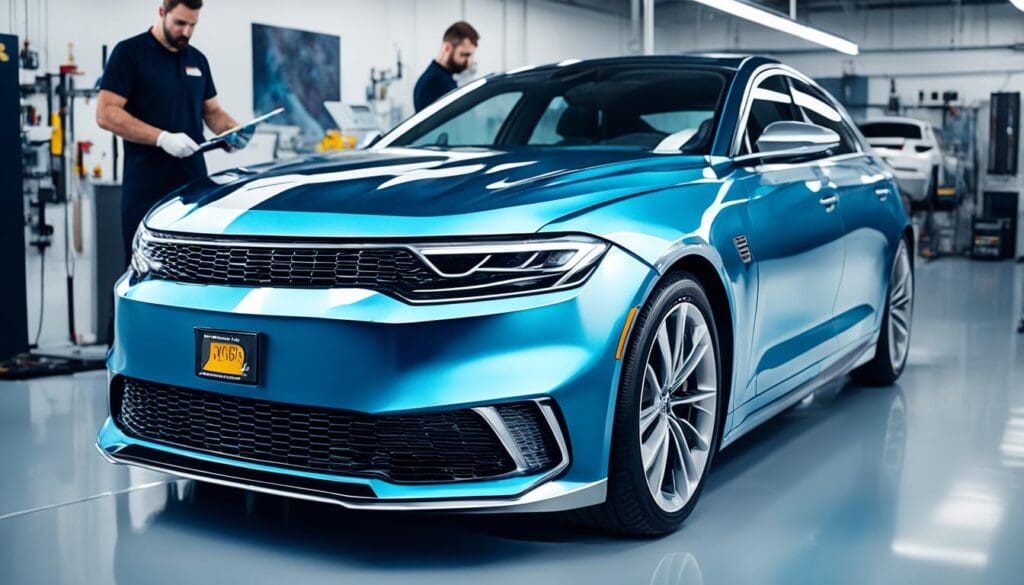
Experts use advanced techniques and tools for this precision. They compare color chips to the car’s paint to find the best match. Then, they spray a paint sample on a card to check it against the original finish.
Spectrophotometers, high-tech color-measuring tools, are key in paint matching. They analyze the paint’s color and how it reflects light. This gives detailed info for making an exact color match.
Quality control is also vital in paint matching. After applying the paint, it’s checked under different lighting conditions. This ensures a smooth, perfect finish. Such careful checking keeps the quality control high for great auto body repairs.
By using the latest technology, special tools, and skilled technicians, collision repair pros can match paint with amazing precision. They deliver results that go beyond what car owners expect.
Conclusion
At Curro’s Paint and Body, we blend art and science to give our clients top results. Our skilled technicians know how to match colors perfectly. They use the latest technology and methods to make your car look new again.
Looking for a reliable “auto body shop near me” in the CSRA? Curro’s Paint and Body is your go-to. We offer great work and personal care to make your car shine. Contact us today for perfect color matching on your car.
We’re proud to mix art and science at Curro’s Paint and Body. Our customers love the results we achieve. Trust us to make your car look amazing with our expertise and hard work.
FAQ
What is the importance of color matching in auto repairs?
Color matching is key for keeping a car’s value high. A paint job that doesn’t match can lower its worth. For many, their car is a reflection of their style. So, a repair that matches the color perfectly keeps the car looking as it should.
What are the key challenges in the color matching process?
Paint fades over time from sunlight and weather. Paint batches can vary, making it hard to match. Metallic and pearlescent paints are tricky because they change color with the light.
How have technological advancements improved the color matching process?
New tech like spectrophotometers and computerized paint mixers has changed auto repair. They make matching paint colors more accurate and quicker.
What is the importance of the human element in the paint matching process?
Humans are vital for a perfect paint job. Technicians need to know a lot about color theory and how to adjust colors with small changes in pigments.
What techniques are used to ensure precise color matching?
Techniques like comparing color chips and using spray-out cards help with accuracy. Tools like light booths and high-quality spray guns are also key for a flawless finish.

