

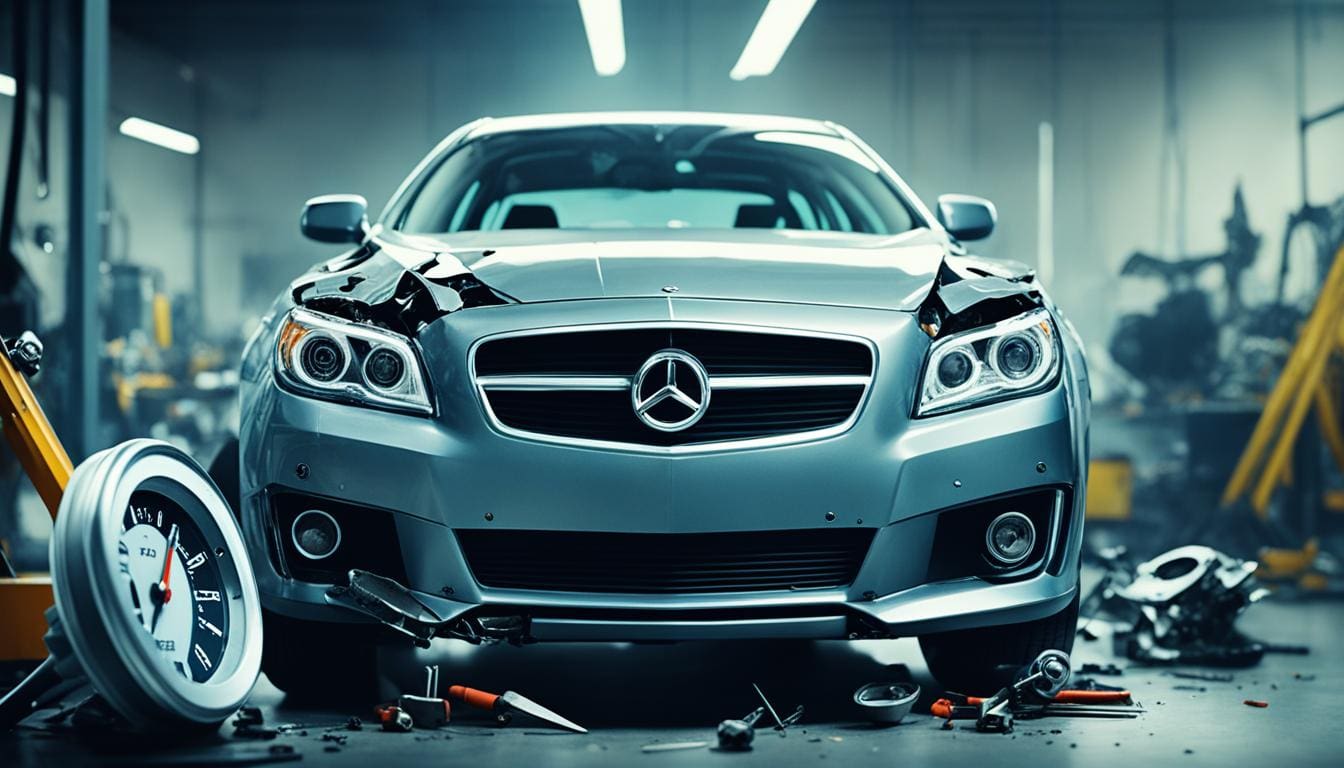
Having a car in the auto body shop can be stressful, especially if you need to find other ways to get around. You might need to use public transport or borrow a car. The time you’ll wait for your car to be fixed can change a lot. It depends on how badly the car is damaged, the type of car, and insurance claims.
StormWise, a top collision repair service, says the average time for fixing a car can be from a few hours to weeks or even months. Knowing about the repair process and what affects the time can help you plan better for your car’s fix.
Key Takeaways
- The average auto body repair time can range from a few hours to several weeks or longer, depending on the extent of the damage.
- Factors like the severity of the collision, availability of replacement parts, and insurance company involvement can all impact the repair timeline.
- Minor repairs like windshield replacements or bumper fixes may be completed in a matter of hours or days, while more extensive damage can require several weeks or months.
- The collision repair process involves several stages, including assessment, insurance approval, parts ordering, body repair, and final quality control checks.
- Prioritizing safety and completeness over speed is crucial, as rushing the repair process could compromise the vehicle’s structural integrity and safety.
Average Collision Repair Time
The time needed for collision repair can change a lot based on the damage’s type and extent. We usually divide collision repairs into minor and major types.
Minor Collision Repair
Minor repairs, like small dents, scratches, and chipped paint, take 1 to 3 days. These repairs are simple and often don’t need many new parts.
Major Collision Repair
Major collision repair deals with big damage to many car parts. These repairs can take 1 to 3 weeks. The time depends on how bad the damage is and how complex the repairs are.
Common Repair Types and Timelines
Here are some common collision repair timeline estimates for specific repairs:
- Paintless Dent Repair: 1-2 days
- Bumper Repair/Replacement: 1-3 days
- Fender Repair/Replacement: 1-4 days
- Door Repair/Replacement: 2-4 days
- Glass Replacement: 1-2 days
- Frame Straightening: 4 days to 2 weeks
- Paint Repair (minor): 2-4 days
- Paint Repair (major): 1-2 weeks
- Airbag Replacement: 2-5 days
- Engine Repair/Replacement: 1-4 weeks
- Full Vehicle Restoration: 4-8 weeks or longer
The exact time for collision repair can change a lot. It depends on the damage’s severity, part availability, the vehicle type, insurance company rules, and the repair shop’s workload.
Stages of the Collision Repair Process
Understanding the collision repair process can seem overwhelming. But knowing the main stages can make things clearer. Our team at the collision repair center will guide you through each step. We aim to make the repair of your vehicle smooth and timely.
Assessment and Estimation
The first step in the collision repair process is assessment and estimation. Our skilled inspectors will carefully document and photograph the damage. They will then provide a detailed estimate for the repairs needed. This process can take a few hours to a whole day, depending on how severe the collision was.
Insurance Approval
If your vehicle is insured, the next step is getting approval from your insurance company. This can take about 3 to 5 days. The insurance company will review the estimate and decide on the repairs they will cover.
Parts Ordering and Receiving
After getting approval, we order any parts needed for the repairs. This can add 1-2 hours to 1-2 days to the timeline. It depends on how quickly the parts arrive.
Body Repair and Painting
The body repair and painting part of the process takes the most time. It can take from 1 day to 4 weeks, depending on the damage’s severity.
Reassembly and Quality Control
Finally, we reassemble your vehicle and do a thorough quality control check. This stage usually takes less than a day. It ensures your car is back to its pre-accident condition.
Knowing these key stages of the collision repair process helps you prepare for the repair timeline. It also gives you a clear idea of the repair stages involved in fixing your vehicle.
Factors Affecting Collision Repair Time
Collision repair time can change a lot based on several important factors. Knowing these factors helps set the right expectations and makes the repair smoother.
Severity of Damage
The damage’s severity is a big factor in how long repairs take. Small dents or scratches might take just days to fix. But, bigger damage like structural or mechanical issues can take weeks.
Availability of Replacement Parts
Having the parts you need is key to a quick repair. If parts are easy to get, work can go smoothly. But, if parts are hard to find, the repair might be delayed.
Type of Vehicle
The vehicle’s make and model can also affect repair time. Cars that are special, luxury, or imported might need special parts and tech. This can make the repair take longer.
Insurance Company Involvement
Insurance claims can add time to repairs. Dealing with insurance paperwork and approvals can slow things down.
Repair Shop Workload
The repair shop’s workload can also change how fast repairs are done. Shops that are very busy might take longer to fix your car than those that have more space and time.
Understanding these factors helps us plan and manage repairs better. This way, we can fix your car quickly and efficiently.
Collision Repair Time
Collision repair time can vary a lot, from just a few hours for small fixes to weeks or even months for big damage. The time it takes to fix a car after a collision depends on many things. These include how bad the damage is, if you can find the right parts, what kind of car it is, if insurance is involved, and how busy the repair shop is.
For small accidents, like hitting a parking meter, repairs might be done in a few days. But for big accidents with a lot of damage, it could take weeks or even months. This is because big repairs need careful checks, finding the right parts, and detailed work to make sure the car is safe and works right.
Insurance companies can also change how long repairs take. Some might take days or weeks to say okay to the repairs, which can slow things down. Also, if your car is a specialty or foreign model, finding the right parts can take longer.
To get your car fixed faster, pick a trusted and skilled auto body shop, like Curro’s Paint and Body. They can handle the repair quickly and work well with insurance companies. Knowing what affects repair time helps you plan and set realistic expectations for fixing your car after a collision.
- Collision repair time can range from a few hours for minor repairs to several weeks or months for major damage.
- Factors affecting repair time include the severity of damage, availability of replacement parts, vehicle type, insurance company involvement, and the repair shop’s workload.
- Minor collisions like fender benders may take a few days, while major accidents involving extensive damage can take multiple weeks or months.
- Insurance company approval and the type of vehicle being repaired can also impact the repair timeline.
- Choosing an experienced auto body shop can help streamline the repair process and manage customer expectations.
Phases of Collision Repair
The collision repair process has three main phases: initial reviews, repairs and parts replacement, and final checks. These phases work together to make sure the vehicle gets fixed quickly and smoothly for the owner.
Initial Reviews
The first phase is all about checking the damage, figuring out repair costs, and getting insurance approval. A repair shop’s estimator does a detailed inspection, noting both visible and hidden damage. Sometimes, the insurance company needs the car to be taken apart to see the full damage.
Repairs and Parts Replacement
After getting approval, the repair team starts fixing the vehicle. They use advanced tools to check the car’s structure, make repairs, and order new parts. Bodywork, painting, and getting everything ready are key steps in this part of the collision repair process.
Final Checks
Before giving the car back, it goes through quality control checks. This means putting it back together, testing everything, washing it, and a final inspection. The repair timeline ends when the car is clean, detailed, and ready for the customer.
Good communication with the repair shop and managing what customers expect is crucial for a great experience. Knowing the steps helps car owners understand the repair process and trust the final result.
Factors Impacting Repair Timeline
The time it takes to fix a car after a collision depends on several things. These include how badly the car is damaged, if parts can be easily replaced, the skill of the repair team, and how insurance works. Knowing these things helps set realistic expectations and makes the repair smoother.
Damage Severity
How badly a car is damaged affects the repair time. Cars with major damage, like structural or mechanical problems, take longer to fix than those with just cosmetic issues. This means more complex repairs can add weeks to the time needed for repairs.
Part Availability
Getting the right parts is key to fixing a car fast. About 25% of all auto parts are on backorder due to supply chain issues, which can slow down repairs. This is especially true for rare or specialty cars, where finding the right parts can take more time.
Technician Expertise and Workload
The skill and workload of repair technicians also play a big role. Mackin’s Auto Body, a well-known auto body shop in Portland and SW Washington, says there’s a shortage of workers and materials. This shortage can make repairs take longer.
Insurance Claims Process
Insurance companies and their claims process can also slow things down. Insurance adjusters usually take 2-3 days to approve extra repairs. Finding more problems during repairs can also delay when the car is fixed.
Understanding these factors helps drivers know what to expect when fixing their car after a collision. This way, they can plan better and get a quicker, better result.

Common Repair Types and Expected Timelines
Understanding the typical timelines for common collision repairs helps you plan and set realistic expectations for your vehicle’s restoration. The repair time varies a lot based on the damage’s type and severity.
For small dents, scratches, and bumper fixes, repairs usually take 1 to 4 days. Typical Duration: 1-2 Days for minor dents and scratches, and Typical Duration: 2-3 Days for bumper replacements.
Deeper repairs, like fixing paint damage, structural issues, and suspension or mechanical parts, can take Typical Duration: 2-4 Days, Typical Duration: 5-7 Days, and Typical Duration: 3-6 Days, respectively.
Several factors can change the repair timeline. These include part availability, insurance claims, and technician skill. Severe damage, like frame straightening or major engine work, can take 4-8 weeks or more for full restoration.
Knowing about these repair types and timelines helps you plan and manage your expectations. Remember, each vehicle’s repair time is different and can change based on the situation.
- Typical Duration: 1-2 Days for minor dents and scratches
- Typical Duration: 2-3 Days for bumper replacements
- Typical Duration: 2-4 Days for paint damage repair
- Typical Duration: 5-7 Days for structural damage repair
- Typical Duration: 3-6 Days for suspension and mechanical parts repair
Conclusion
The process of fixing a car after a collision can take a lot of time and effort. It depends on how bad the damage is, if parts are available, the car’s type, insurance, and how busy the repair shop is. Knowing about these factors helps us plan better and set realistic expectations for fixing our cars.
Choosing a trusted auto body shop like Curro’s Paint and Body makes fixing your car smoother and faster. They have skilled technicians and quality parts, which means less waiting and a car that looks new again. If you need car repair services, reach out to Curro’s Paint and Body to get your car back on the road fast.
Every car repair is different, so the time it takes can change a lot. By keeping up with the process and working with your repair shop, you can make things go smoother. This way, you can get your car back on the road without too much delay.
FAQ
How long does the collision repair process typically take?
Collision repair time can vary a lot. It can be as short as a few hours for small fixes or take weeks or even months for big damage. The time needed depends on the damage’s severity, part availability, vehicle type, insurance, and the shop’s workload.
What is the average timeline for minor and major collision repairs?
Minor repairs like small dents or scratches can take 1-3 days. Major repairs, which fix more damage, can take 1 to 3 weeks.
What are the common types of collision repairs and their expected timelines?
Fixing common issues like bumper or door damage usually takes 1-4 days. Paintless dent repair and glass replacement might take 1-2 days. But, complex repairs like frame straightening or full restoration can take 4 days to 2 weeks or more.
What are the key stages of the collision repair process?
The repair process has several key stages. First, there’s an initial assessment and estimation. Then, insurance approval is needed. Next, parts are ordered and received, followed by body repair and painting. Finally, the vehicle is reassembled and checked for quality.
What factors can influence the collision repair timeline?
Several things can affect how long repairs take. These include the damage’s severity, part availability, vehicle type, insurance claims, and the shop’s workload.
How can I plan and manage my expectations during the collision repair process?
Knowing the repair stages and what can change the timeline helps plan better. Choosing a trusted auto body shop can also make the repair smoother and faster.

