

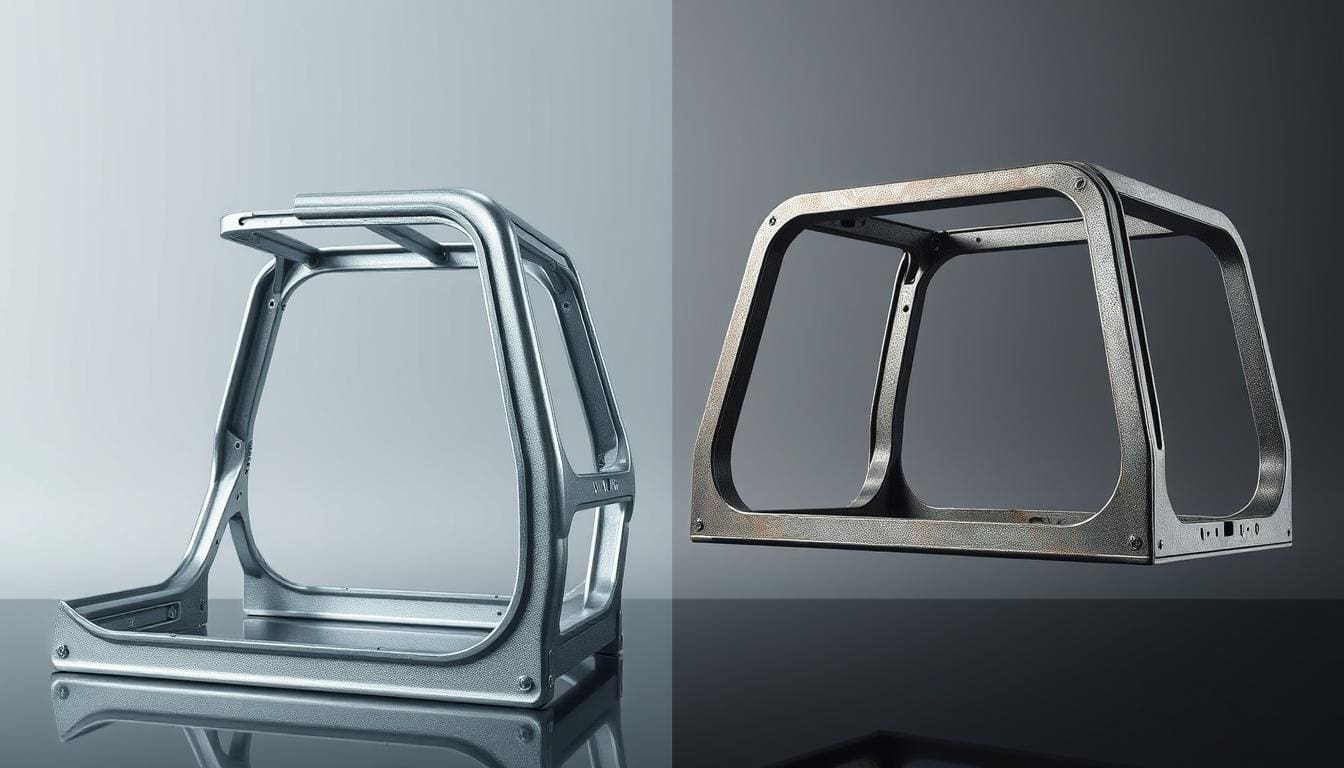
As we navigate the ever-evolving automotive landscape, the choice between aluminum and steel frames has become a pivotal consideration. These two primary materials used in vehicle manufacturing each boast unique properties that can significantly impact the performance, durability, and overall experience of our vehicles. From strength and weight to corrosion resistance and cost-effectiveness, understanding the nuances of aluminum and steel frames is crucial in making an informed decision for our automotive needs.
Key Takeaways
- Steel is denser than aluminum, resulting in heavier frames, but it offers superior impact resistance for safety.
- Aluminum has a higher strength-to-weight ratio, making it a compelling choice for improved fuel efficiency.
- Aluminum’s natural oxide layer provides excellent corrosion resistance, while steel’s versatility and cost-effectiveness make it a widely used option.
- The steel industry has developed over 200 grades to meet automakers’ evolving needs, showcasing its adaptability.
- Aluminum recycling is costlier than steel, but both materials are highly recyclable, contributing to sustainable practices.
Understanding the Basics of Frame Materials
When it comes to vehicle manufacturing, the choice of frame materials is a crucial factor that can greatly impact a vehicle’s performance, durability, and overall aesthetics. Two of the most commonly used materials for automotive frames are aluminum and steel, each with its own unique properties and advantages.
What Are Aluminum Frames?
Aluminum frames are known for their lightweight construction and high strength-to-weight ratio. Aluminum is a highly corrosion-resistant metal that naturally forms a protective oxide layer, making it a popular choice for frames in automotive manufacturing. These frames offer excellent structural integrity while keeping the overall weight of the vehicle down, which can improve fuel efficiency and handling.
What Are Steel Frames?
Steel frames, on the other hand, are renowned for their strength, durability, and versatility. Steel is a dense and robust material commonly used for structural components in vehicle manufacturing. While steel frames may be heavier than their aluminum counterparts, they provide exceptional resistance to impacts and offer a high level of structural integrity.
Key Differences in Composition
The primary difference between aluminum and steel frames lies in their chemical composition and physical properties. Aluminum is less dense than steel, making it a more lightweight option. Additionally, aluminum naturally forms a protective oxide layer, enhancing its corrosion resistance. In contrast, steel is denser, stronger, and more versatile, but it is also more prone to rusting if left untreated.
Both aluminum and steel frames have their unique advantages, and the choice between the two materials ultimately depends on the specific needs and requirements of the vehicle being manufactured. Understanding the differences in frame materials, structural integrity, and automotive manufacturing is essential for making an informed decision when it comes to designing and building a vehicle.
Weight Comparisons: Aluminum vs Steel
When it comes to vehicle frames, the choice between aluminum and steel can significantly impact performance. Aluminum, being 2.5 times less dense than steel, offers a significant weight advantage. This reduced weight translates to improved maneuverability, a tighter turning radius, superior acceleration, and better braking. Lighter vehicles also enjoy enhanced fuel efficiency due to faster acceleration and deceleration.
How Weight Affects Performance
The weight difference between aluminum and steel frames has a direct influence on a vehicle’s performance. Aluminum’s lighter construction allows for greater agility and responsiveness on the road. Drivers can expect a more nimble and engaging driving experience, with the vehicle feeling more responsive to their inputs. In contrast, the additional weight of steel frames can compromise maneuverability, reducing the overall driving dynamics.
Fuel Efficiency Considerations
- Lighter aluminum frames contribute to improved fuel efficiency by reducing the overall vehicle weight.
- With less mass to move, the engine requires less power to accelerate the vehicle, leading to better fuel economy.
- The weight savings also positively impact braking, as the vehicle requires less energy to slow down, further enhancing fuel efficiency.
While steel frames offer their own advantages, the weight implications of aluminum can provide a significant boost to a vehicle’s performance and fuel efficiency. This is an important consideration for those seeking a more dynamic and economical driving experience.

Durability and Strength: Which Material Wins?
When it comes to vehicle frames, both aluminum and steel have their unique strengths and benefits. While aluminum is pound-for-pound stronger than steel, steel offers exceptional impact resistance, making it a preferred choice for safety-critical components like frames and crumple zones. The choice between these two materials ultimately comes down to balancing structural integrity, safety considerations, and impact resistance.
How Aluminum Stands Up in Crashes
Aluminum frames are known for their exceptional structural integrity. They can be reinforced with custom, heavy-duty extrusions to increase vehicle safety and offer better maneuverability and faster braking, potentially reducing accident risks. Aluminum’s lightweight nature also contributes to improved safety considerations, as it helps enhance vehicle responsiveness and control.
Steel’s Resistance to Impacts
On the other hand, steel frames are renowned for their exceptional impact resistance. Steel’s strength and durability make it efficient at protecting drivers in collisions, with the ability to absorb and dissipate the force of an impact effectively. This makes steel a popular choice for safety-critical components, ensuring structural integrity and safety considerations are met.
Ultimately, both aluminum and steel have their strengths in crash performance, and the choice between the two often comes down to the specific design and engineering considerations of the vehicle. Careful evaluation of the trade-offs between weight, structural integrity, safety considerations, and impact resistance is crucial in determining the optimal frame material for a vehicle.
Cost Factors: Budgeting for Your Frame
When it comes to selecting a vehicle frame, the cost is a crucial consideration. The initial cost of the frame material and long-term maintenance expenses can have a significant impact on your overall budget. Let’s explore the cost factors and savings potential of aluminum versus steel frames.
Initial Costs of Aluminum vs Steel
Steel frames are generally less expensive upfront compared to aluminum. Steel is a more abundant and readily available material, making it a more cost-effective choice for manufacturers. On the other hand, aluminum frames have higher initial costs due to the complex manufacturing process and the material’s scarcity.
Long-Term Maintenance Expenses
While steel may be the more economical option initially, aluminum frames can offer cost savings in the long run. Aluminum’s resistance to rust and corrosion means lower maintenance costs over the vehicle’s lifetime. Steel frames, on the other hand, are more susceptible to rust and corrosion, especially in coastal or snowy regions, requiring more frequent repairs and replacement of parts like tires and weight springs.
Ultimately, the choice between aluminum and steel frames should consider not only the initial cost savings but also the long-term maintenance costs and repair challenges associated with each material. By carefully evaluating these factors, you can make an informed decision that aligns with your budget and the specific needs of your vehicle.

Aesthetic Appeal: Style Choices for Your Vehicle
When it comes to vehicle design, the choice between aluminum and steel frames can significantly impact the aesthetic appeal of your ride. Both materials offer unique advantages that cater to different style preferences and brand identities.
Customization Options with Aluminum
Aluminum’s lightweight and malleable nature makes it an excellent choice for customization. Its unique properties allow for more intricate designs and shapes in body panels and frames, enabling vehicle owners to create a truly personalized look. From sleek, aerodynamic contours to bold, attention-grabbing features, aluminum offers a wide range of customization possibilities to enhance the visual appeal of your vehicle.
Steel Frame Aesthetics
In contrast, steel frames often convey a classic, robust appearance that appeals to those seeking a traditional aesthetic. Steel’s inherent strength and durability lend themselves well to certain vehicle types, such as rugged off-road SUVs or timeless muscle cars. While steel may not offer the same level of customization as aluminum, it can still be painted and finished to achieve desired looks, often resulting in a timeless and sophisticated appearance.
Ultimately, the choice between aluminum and steel for aesthetic appeal often depends on the specific vehicle design and the brand image the owner wishes to convey. Both materials can be leveraged to create visually striking and unique vehicles, catering to a wide range of personal preferences and design styles.
Environmental Impact of Frame Materials
When it comes to the environmental impact of vehicle frame materials, recycling and sustainability are key considerations. Aluminum, a highly recyclable metal, has a well-established recycling infrastructure. The recycling process for aluminum requires significantly less energy compared to producing new aluminum from raw materials. On the other hand, steel is also recyclable, but the process tends to be more energy-intensive.
Aluminum’s lighter weight contributes to better fuel efficiency, ultimately reducing overall vehicle emissions. Steel production, however, has a higher initial environmental impact, but its durability can lead to longer vehicle lifespans, potentially offsetting some of the environmental concerns. Both materials have pros and cons in terms of sustainability, with aluminum generally considered more environmentally friendly due to its recyclability and weight advantages.
Recycling Aluminum vs Steel
Aluminum frames require about 170 kg of carbon dioxide equivalents per kg of bike, compared to carbon fiber models with around 60 kg. The recycling process for aluminum is relatively efficient, making it a more sustainable choice. In contrast, producing steel emits approximately 1.8 tons of CO2 per ton of steel, lower than the 2.2 tons of CO2 per ton of aluminum.
Sustainability Considerations
When it comes to the environmental impact of frame materials, sustainability is a crucial factor. Carbon fiber frames use about 2,000 liters of water per kg of bike, higher than the approximately 1,200 liters for aluminum frames. Titanium frames, known for their favorable weight-to-strength ratio, are harder to extract and refine than aluminum, making them less sustainable.
Exploring alternative materials like bamboo, which is durable, recyclable, and energy-light in the production process, can also contribute to a more sustainable future for the automotive industry. Ultimately, a comprehensive approach to reducing the environmental impact of vehicle frames, including recycling, material selection, and innovative manufacturing techniques, is essential for a greener, more sustainable future.
Conclusion: Making the Right Choice for Our Vehicles
As we’ve explored the key differences between aluminum and steel frames, it’s clear that the choice between the two materials depends on our specific vehicle needs and priorities. Both offer unique advantages that cater to different driving scenarios and requirements.
Summarizing the Benefits of Each Material
Aluminum frames excel in weight reduction, fuel efficiency, and corrosion resistance, making them an ideal choice for performance-oriented and fuel-efficient vehicles. On the other hand, steel frames provide exceptional strength, durability, and cost-effectiveness, making them a practical option for heavy-duty applications and budget-conscious consumers.
Ultimately, many modern vehicle manufacturers are opting for a combination of both aluminum and steel to leverage the respective strengths of each material. When selecting the right frame material for our vehicles, it’s crucial to consider factors like vehicle type, intended use, and long-term costs to ensure we make the most informed decision that aligns with our driving needs and preferences.
FAQ
What are the primary materials used in automotive manufacturing for vehicle frames?
The two main materials used in automotive manufacturing for vehicle frames are steel and aluminum, each with unique properties and characteristics.
What are the key differences between aluminum and steel frames?
The key differences between aluminum and steel frames lie in their composition, strength, weight, corrosion resistance, and cost. Aluminum is less dense, naturally forms a protective oxide layer, and is highly recyclable, while steel is denser, stronger, and more versatile but prone to rust if untreated.
How does the weight difference between aluminum and steel affect vehicle performance?
Aluminum is 2.5 times less dense than steel, significantly reducing vehicle weight. This weight reduction leads to increased maneuverability, tighter turning radius, superior acceleration, and better braking. Lighter vehicles also offer improved fuel efficiency due to faster acceleration and deceleration.
Which material performs better in terms of safety and crash protection?
Both aluminum and steel have their strengths in crash performance. Aluminum is pound-for-pound stronger than steel and can be reinforced with custom, heavy-duty extrusions to increase vehicle safety. It offers better maneuverability and faster braking, potentially reducing accident risks. Steel has high impact resistance, making it suitable for safety-critical parts like frames and crumple zones.
Which material is more cost-effective in the long run?
While steel may be cheaper upfront, aluminum can provide cost savings throughout the vehicle’s lifetime. Aluminum has higher upfront costs but offers long-term savings through reduced fuel consumption and maintenance. Aluminum’s rust resistance decreases maintenance and replacement costs over time, whereas steel requires more frequent maintenance due to rust and corrosion issues.
How do aluminum and steel differ in terms of aesthetic appeal and customization options?
Aluminum offers excellent customization options due to its malleability and lightweight nature, allowing for more intricate designs and shapes in body panels and frames. Steel provides a classic, robust appearance and is often preferred for its traditional aesthetic in certain vehicle types. Both materials can be painted and finished to achieve desired looks, but aluminum’s corrosion resistance may maintain appearance better over time.
Which material is more environmentally friendly?
Aluminum is highly recyclable, with a well-established recycling infrastructure, and its recycling process requires significantly less energy compared to producing new aluminum. Steel is also recyclable, but the process is more energy-intensive. Aluminum’s lighter weight also contributes to better fuel efficiency, reducing overall vehicle emissions.

