

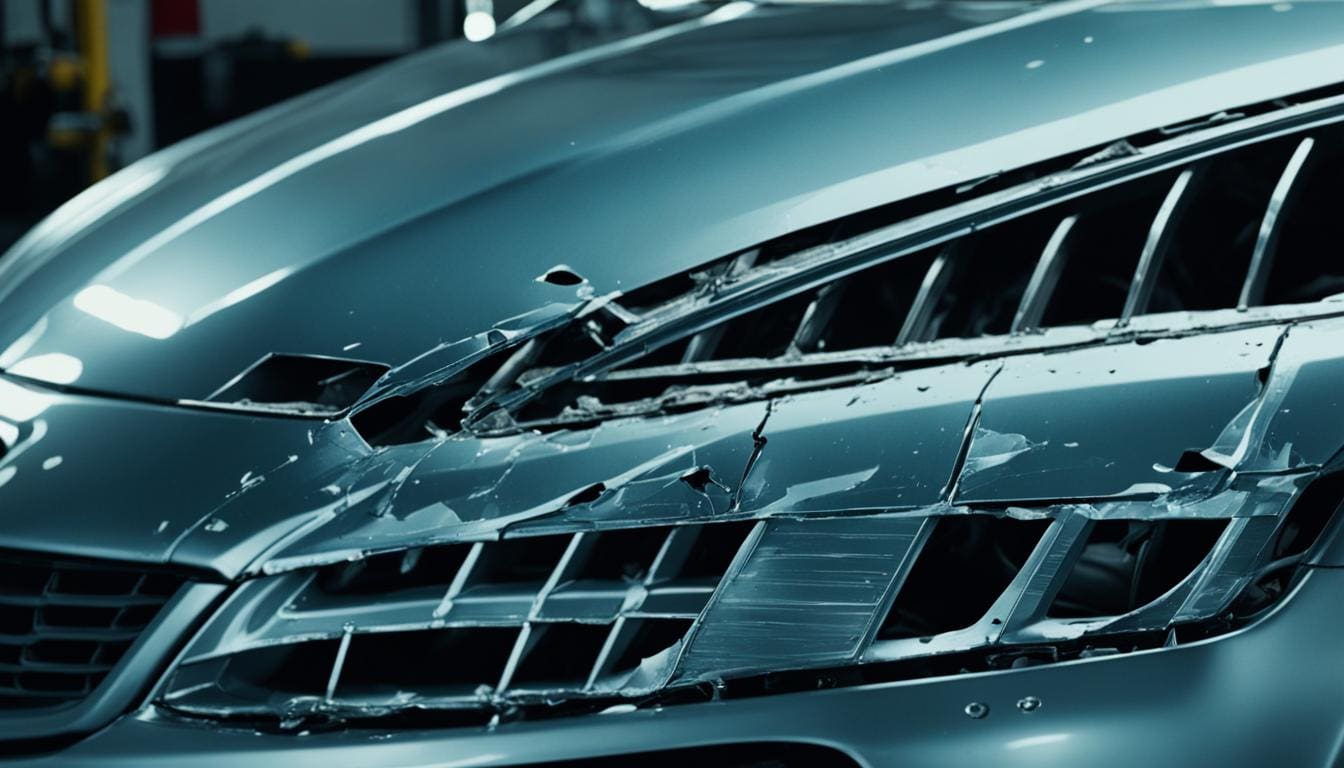
The car frame is key to keeping our vehicles safe and sound. It’s important whether our cars have a body-on-frame or unibody design. Frame damage can really affect how well our cars perform and stay safe on the road. Since about 20% of car accident damages involve the frame, it’s vital to spot the signs early.
Shockingly, nearly 30% of car accidents with frame damage are missed right after the crash. This shows how hidden this issue can be. Knowing what to look for can help us keep our cars safe and ready to hit the road. It also keeps us and others safe while driving.
Key Takeaways
- Car accidents resulting in frame damage account for around 20% of overall collision-related damages.
- Approximately 30% of car accidents involving frame damage go unnoticed by drivers initially.
- Poor car alignment, a common sign of frame damage, affects about 15% of vehicles involved in accidents.
- Uneven wear on shocks, suspension, and tires can indicate bent frames in up to 25% and 35% of cars with frame damage, respectively.
- Prompt attention to any signs of frame damage is crucial to ensure vehicle safety and avoid costly repairs.
What is a Car Frame?
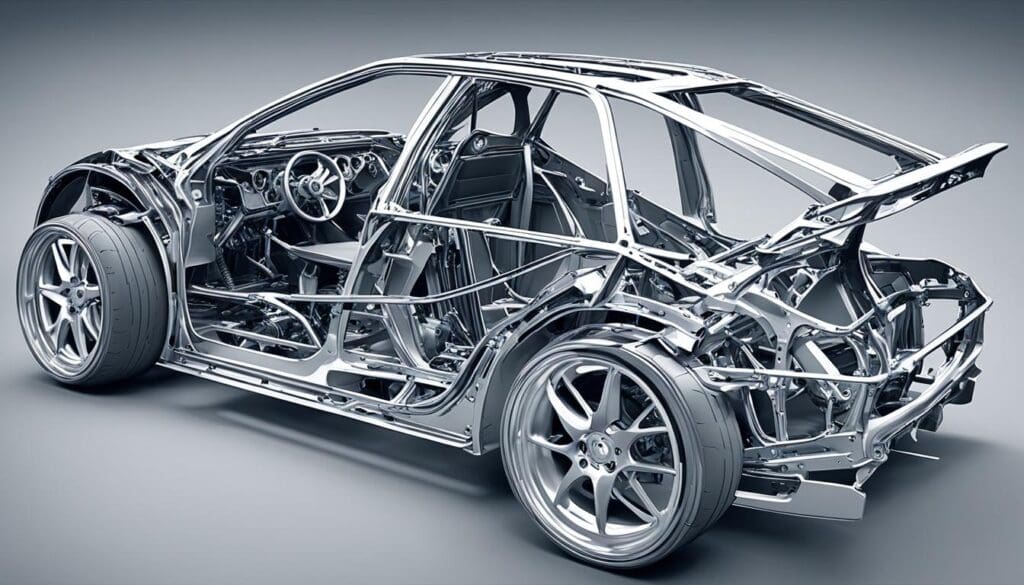
The car frame is the key part that holds up the whole vehicle. It’s what the car’s body sits on, giving it the strength and stability it needs. Knowing about the two main types of car frames – body-on-frame and unibody – is important for spotting and fixing frame damage.
Body-on-Frame Construction
In a body-on-frame car, the frame is a strong, separate piece that the body attaches to. This type, also known as the ladder frame, is often used in trucks, SUVs, and big vehicles. The frame supports the body and parts like the engine and suspension. This design is great for heavy-duty use because it’s very strong and can handle heavy loads.
Unibody Construction
Unibody cars have the frame and body combined into one piece. This is mostly seen in passenger cars, where the body parts and the frame are welded together. This makes the car lighter and more fuel-efficient. Unibody frames might not be as strong as body-on-frame ones, but they offer better handling and a smoother ride.
It’s important to know the differences between these frame types. This helps understand how a car might behave in a crash and how to spot frame damage.
Understanding Car Frame Damage
Car frame damage is a big deal that can hurt your vehicle’s safety. It affects both traditional ladder frames and modern unibody frames. Any damage to these parts can lead to big problems.
Crashes often cause car frame damage. This can bend, buckle, or crack the frame, especially in fast or multi-car accidents. Rust and bad repairs can also hurt the frame over time, making it weaker.
- Not taking care of suspension issues or ignoring rust can also damage the car frame.
- Frame damage can come from many things, like hitting potholes, slow-speed crashes, or even parking lot mishaps.
Fixing car frame damage quickly is key to keeping your car safe and valuable. It also helps with insurance. To avoid frame damage, follow the car maker’s service schedule, spread heavy loads evenly, and protect your car from the elements.
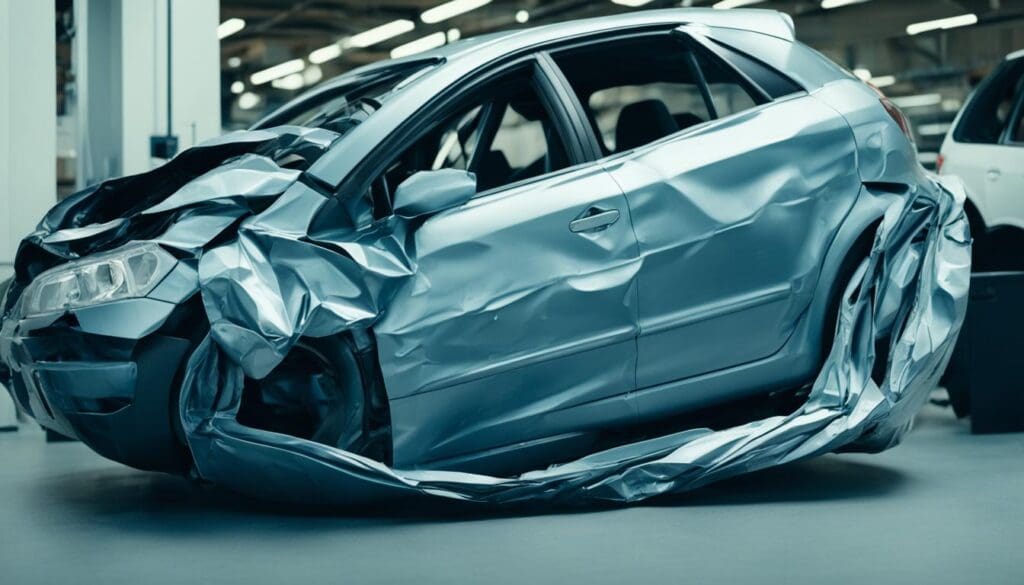
How much it costs to fix frame damage depends on how bad it is. Minor issues might cost a few hundred dollars, but serious damage can be in the thousands. In extreme cases, the car might be too damaged to fix, costing a lot of time and money.
Visible Signs of Car Frame Damage
Visible damage to a car’s frame is often the first clue it has been hit. Look for cracks, bends, or warping in the undercarriage or along the car’s edges. Also, uneven panel gaps and misalignments on doors, hoods, trunks, or fenders suggest the frame is damaged.
These signs mean the car needs a pro to fix it fast. If ignored, the damage can get worse, risking the car’s safety and value. Fixing visible damage, frame cracks, and panel misalignment is key to keeping the car safe and roadworthy.
Cracks, Bends, or Warping
- Visible damage to the frame, such as cracks, bends, or warping, is a clear sign of structural issues.
- These defects are often found in the undercarriage or along the edges of the vehicle, indicating a compromised frame.
- Ignoring these signs can lead to further deterioration and compromise the car’s safety and performance.
Uneven Panel Gaps and Misalignments
- Uneven gaps between body panels, such as doors, hoods, trunks, or fenders, can indicate frame damage.
- Misalignment of these panels is another visual cue that the frame’s structural integrity has been affected.
- These irregularities require immediate attention from a professional collision repair specialist to ensure the vehicle’s safe and proper operation.
Driving and Handling Indicators of Car Frame Damage
When a car’s frame gets damaged, it affects how the car drives and handles. These signs show that the frame might need fixing.
One sign is when the car drifts or pulls to one side while driving. This alignment issue can come from a bent or twisted frame. It also causes unusual tire wear patterns because the wheels don’t align right.
- Steering that feels “off” or pulls in one direction is another sign of frame damage.
- If the rear wheels don’t follow the front wheels closely, it could mean frame problems and misalignment.
Don’t ignore these signs, as they suggest serious frame damage. Fixing the frame quickly is key to keeping the car safe and reliable.
By watching for these signs, you can spot frame damage early. This lets you get it checked and fixed right away. If you ignore these signs, you might face more issues like increased tire wear and steering problems. These can make the car less safe and less efficient.
Car Frame Damage and Its Impact
When a car’s frame gets damaged, it can cause big problems for many parts of the vehicle. This damage often affects the suspension and tire wear the most.
Suspension and Tire Wear Issues
A damaged frame makes the ride rough and handling tough. It also wears out suspension parts faster. The suspension parts don’t work right, making driving unstable and unsafe.
This can make tires wear down unevenly and last shorter. It’s a big problem for tire health and safety.
Operational Difficulties and Strange Noises
Frame damage can mess with doors, windows, or the trunk. It also causes strange noises like creaks and rattles. These sounds mean there might be bigger issues that need fixing.
Noticeable changes in a car’s height or stance often point to frame damage. These signs are clues to the car’s frame condition and its mechanical issues and suspension problems.
Fixing frame damage quickly is key to avoid more damage and expensive repairs. Ignoring it can hurt the car’s safety, handling, and performance. This could lead to more serious mechanical issues later on.
Conclusion
Knowing how to spot car frame damage is key to keeping your vehicle safe and sound, especially after a crash. By noticing visual signs, changes in how your car drives, and the effects on its systems, we can act fast. This means getting a pro to check and fix the frame damage.
At Curro’s Paint and Body, our skilled team works hard to make your car as good as new after an accident. We know how vital fixing the frame is for your car’s safety. That’s why we offer top-notch services that focus on solving frame issues.
If you think your car might have frame damage, contact the experts at Curro’s Paint and Body right away. We’ll check your car carefully, give you a full report, and help with your insurance for repairs. Acting quickly helps keep your car strong and safe, giving you peace of mind on the road.
FAQ
What are the two main types of car frames?
Cars mainly use two types of frames. These are body-on-frame and unibody construction.
What is the difference between body-on-frame and unibody construction?
Body-on-frame cars have a separate, strong frame. The body is bolted to it. Unibody cars combine the frame and body into one piece.
What are the signs of car frame damage?
Look for cracks, bends, or warping in the undercarriage or along the edges. Also, check for uneven panel gaps and misalignments on doors, hoods, trunks, or fenders.
How can frame damage affect a vehicle’s driving and handling characteristics?
Frame damage can make the car drift or pull to one side. It can also cause uneven tire wear and steering issues. The rear wheels might not follow the front wheels closely, showing alignment problems.
What are the potential impacts of car frame damage?
Frame damage can lead to suspension problems, causing an uneven ride and handling issues. It can also affect doors, windows, or the trunk’s operation. Strange noises from the vehicle and changes in its height or stance are signs of frame damage.

