


In the world of collision repair, the right tools are as crucial as the skills of the technicians. Auto body technicians are key to fixing damaged vehicles and making them like new. They use specific tools and equipment for this job. This guide will cover the must-have auto body tools and diagnostic gear for professionals in the field. It will also talk about the importance of safety gear.
If you’re looking to become an auto body technician or just want to know more about fixing cars, this article is for you. It will give you a detailed look at the tools and equipment needed for auto body repair. We’ll cover everything from basic hand tools to advanced diagnostic gear. By the end, you’ll know what tools you need to succeed in this exciting field.
Key Takeaways
- Collision repair technicians need a wide range of auto body tools to fix damaged vehicles well.
- Important tools include socket sets, combination wrenches, hammers, dollies, and special tools for dent removal, sanding, and painting.
- Tools like HVLP spray guns and rotary polishers are key for a professional finish.
- Personal protective equipment (PPE) is vital for the safety of auto body technicians during repairs.
- Choosing and keeping tools in good shape can greatly improve the quality and efficiency of repair work.
Essential Auto Body Tools
For collision repair, having the right tools is key. David Sydnor, from UTI’s Collision Repair program, says aspiring technicians need a basic toolkit before a job interview. This toolkit is essential for efficient work.
Collision Repair Tool List
Many shops will give you specialty tools for the job. But, you should have a basic toolkit ready. This includes:
- ¼” Drive Sockets: Six-Point Standard/Metric Socket Set (44), Torx Bit Sockets (4), Six-Point 9mm Deep Socket (1)
- ¼” Drive Tools: QR TD Ratchet, 3″ Extension Bar, 6″ Extension Bar, Universal Joint, 6″ Spinner Handle
- ⅜” Drive Sockets: Six-Point Standard/Metric Deep Sockets (22), Twelve-Point Standard/Metric Sockets (13)
- Wrenches: Twelve-Point Full Polish Standard/Metric Combination Wrenches (26)
- Hex Keys: Long Arm/Short Arm Standard/Metric Hex Key Sets (44)
- Screwdrivers: Phillips & Slotted Professional Screwdriver Set (8)
- Pliers: 7″ Pro Straight Jaw Locking, 6-3/4″ Pro Slip Joint, 10-1/2″ Arc Joint, 8″ Pro Long Nose, 8″ Pro Wide Jaw Diagonal
- Hammers: Shrinking and Utility Pick Hammers (3)
- Chisels: Cold Chisels (3)
- Punches: Punch end Line Up Tools (5)
- Dollies: Universal, Heel, Combination, Panel
- Other Essential Tools: Trim Pad Removing Tool, Hacksaw, Rubber Sanding Block, Blow Gun, Wire Brush, Snips, Scraper, Safety Glasses, Voltage Tester, Tape Measure, Body Trim Set, Primer and Topcoat Guns
Having these tools ready will show your commitment to the field. It also prepares you for the job’s demands.
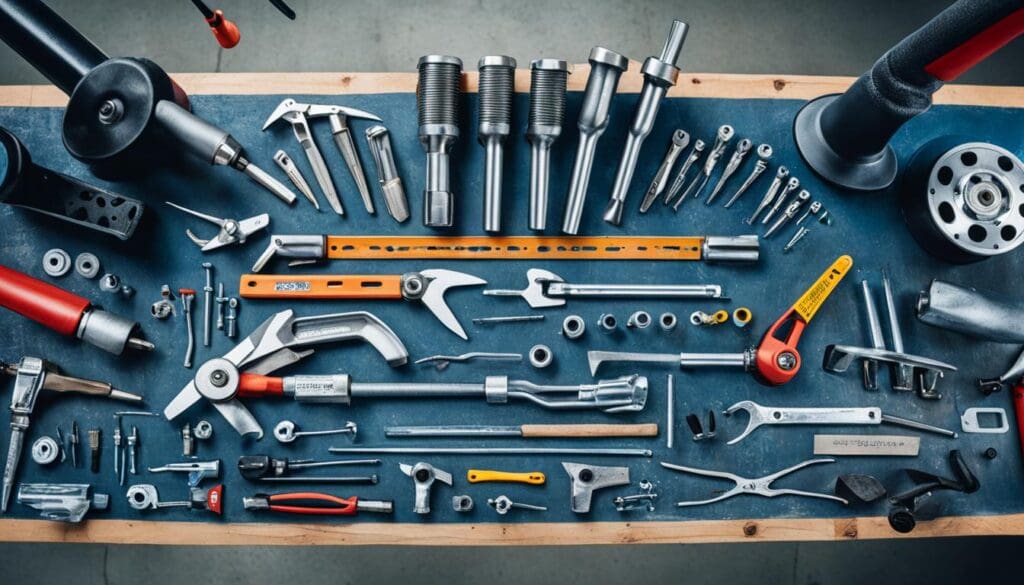
Auto Body Tools
As collision repair technicians, we use many auto body tools to do our jobs well. We have the basic tools already talked about. But, there are more specialized tools that really help us work better and faster.
A flashlight is a must-have. It shines light in dark spots and hard-to-see areas, helping us find and fix problems. A pocket screwdriver is also key. It lets us remove small rivets and open tight containers.
- Pens and markers are needed for signing parts, taking notes, and documenting repairs.
- A notepad helps us jot down important info and steps, especially when learning new skills.
- A multi-tool has many tools, like pliers, that we can use for different tasks.
- A pocket knife is useful for cutting zip ties, opening packages, and more.
- A well-organized tool box or rolling box keeps our tools safe and easy to find.
These auto body tools and the basic collision repair tools are key for a good body shop. With the right tools, we can handle many challenges and give our customers great results.
Personal Protective Equipment (PPE)
In any auto body shop, safety is key. Collision repair technicians need the right personal protective equipment (PPE) to stay safe. This gear protects them from injuries and keeps the work area secure. It covers everything from head to toe.
Here are the must-haves for auto body shop workers:
- Safety toe work boots to protect the feet from heavy objects and potential hazards.
- Work gloves to shield the hands from cuts, scrapes, and bruises.
- Nitrile gloves to provide a barrier and keep hands clean when performing delicate work.
- Coveralls/overalls to offer extra protection for the technician’s clothing and skin.
- Safety glasses to protect the eyes from flying debris, fluids, and other shop hazards.
- Shop rags for quickly cleaning up spills and keeping the work area safe.
- Car creeper to allow technicians to move easily under vehicles without lifting.
- Hearing protection to protect against the noise from power tools, machinery, and other equipment.
Auto body shops should offer a wide range of auto body shop safety and collision repair PPE. This ensures technicians have the right personal protective equipment to work safely and effectively.
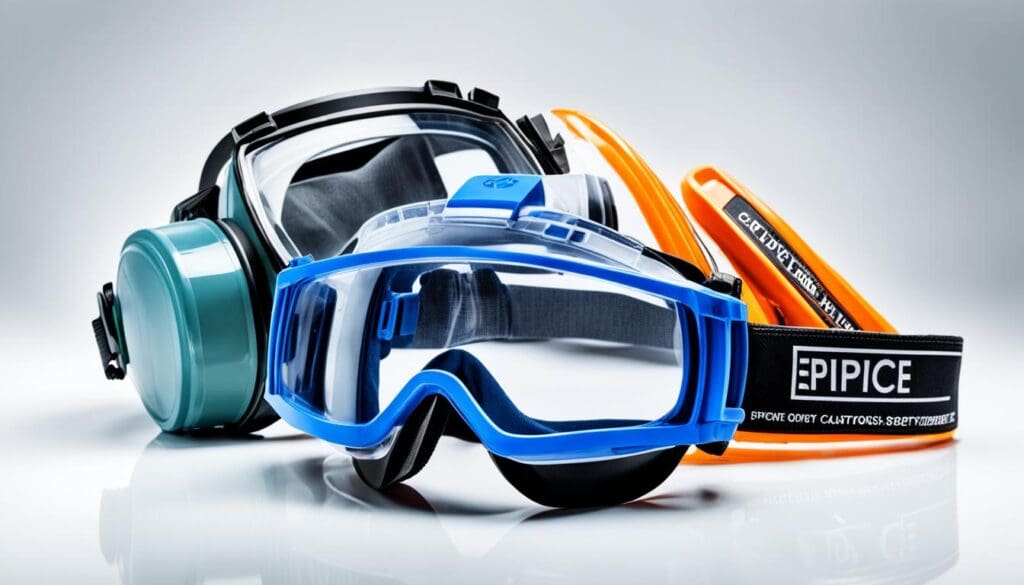
Diagnostic Equipment
In the collision repair industry, diagnostic equipment is key to fixing cars right before we start. These tools help our technicians find problems fast. This leads to better repairs and happier customers.
Essential Diagnostic Tools
Collision repair pros use many specialized tools to check and fix cars. Important tools include a tire pressure gauge, multimeter, OBD-II scanner, inspection light, tire depth gauge, and brake pad thickness gauge.
The tire pressure gauge checks if tires are inflated right. This is key for safety and can show other issues. The multimeter measures electrical values, helping with electrical repairs. The OBD-II scanner reads car codes, showing where problems are.
Also, the inspection light gives us light when we work under the hood. The tire depth gauge and brake pad thickness gauge check car parts. This helps us replace parts on time for the best car performance.
FAQ
What are the essential auto body tools that collision repair technicians need to have?
David Sydnor, from UTI’s Collision Repair program, says it’s key for future technicians to have basic tools before an interview. These include ¼” Drive Sockets, ¼” Drive Tools, and ⅜” Drive Sockets. Also, Wrenches, Hex Keys, Screwdrivers, Pliers, Hammers, Chisels, and Dollies are must-haves.
Other important tools are a Trim Pad Removing Tool, Hacksaw, Rubber Sanding Block, Blow Gun, and more.
What other auto body tools do collision repair technicians often rely on?
Besides the basics, technicians use many other tools. These include a Flashlight, Pocket Screwdriver, Pens and Marker, Notepad, Multi-tool, and a Pocket Knife. They also use a Tool Box or Rolling Box to keep their tools organized and safe.
What personal protective equipment (PPE) is essential for collision repair technicians?
Safety is crucial in auto body shops. Technicians must wear the right PPE to avoid injuries. This includes Safety Toe Work Boots, Work Gloves, Nitrile Gloves, and Coveralls/Overalls.
They also need Safety Glasses, Shop Rags, a Car Creeper, and Hearing Protection.
What diagnostic tools do collision repair technicians use to diagnose vehicle issues?
To fix a vehicle, technicians first need to diagnose the problem. They use tools like a Tire Pressure Gauge, Multimeter, and OBD-II Scanner. An Inspection Light, Tire Depth Gauge, and Brake Pad Thickness Gauge are also essential.

